
The Promise Made
It appears that the Lord has been silent for ten generations. (Since the biblical genealogies skip over generations, this quiet time could be thousands of years.) The last time we have a recorded word of God to one of his people was to Noah, the tenth generation of Genesis 5. Similarly, with Abram, the tenth generation after Noah, the word of God shatters the silence. Without a warm up or an introduction, the Lord calls Abram. And here, we find the same dynamic witnessed back in Genesis 8–9 after the flood: an initial promise issued by the Lord will soon be identified as an explicit covenant.
The opening of Genesis 12 lays the foundation for what will come to be known as the Abrahamic covenant. The covenant begins with the Lord’s call. He summons Abram to go. Abram must let go of one thing to take hold of another, which is no light matter. There’s an increasing intensity in the call. To leave your land means to leave the comforts of your neighborhood, where you know every storefront and shop. Forsaking your kindred means deserting your extended relatives; abandoning your father’s house indicates that God is calling Abram to turn his back on the family name and inheritance. In an age when extended families stuck together as a matter of allegiance, pride, and security, to depart could be reckoned as being a traitor. Abram was leaving all the security he had ever known.
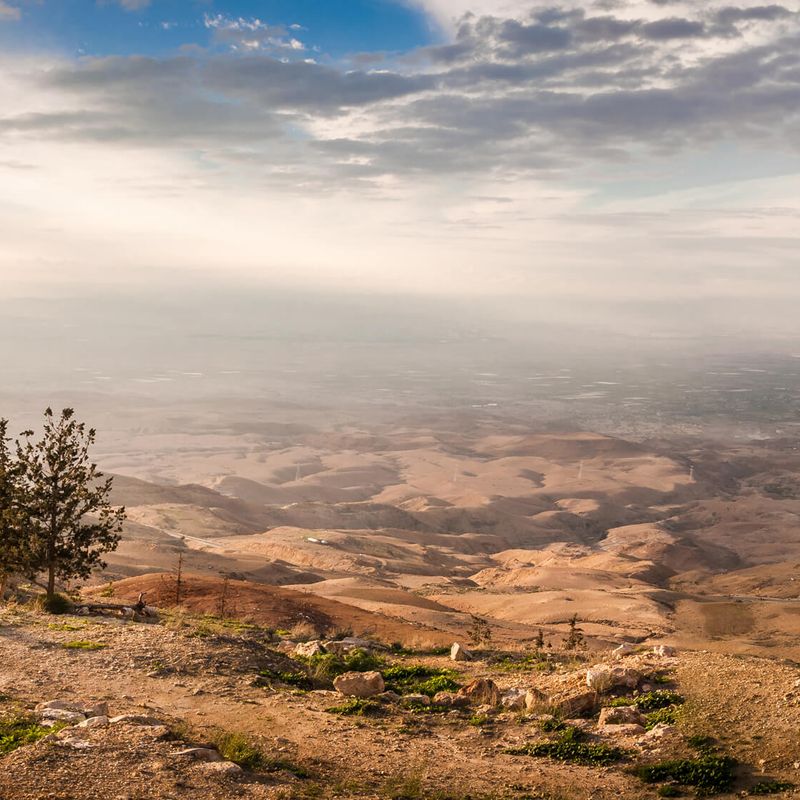
But the loss didn’t compare to what was being gained. Abram couldn’t begin to dream of the generosity of the Lord’s promise, which can be summarized under two main points: the land and the people. One place is left in the rear view mirror, while another appears on the western horizon. Nearly nothing is said about this land in verse 1, but by verse 5, it’s identified as Canaan. Abram tours Canaan from north to south and the Lord appears: “to your offspring, I will give this land.” From heaven, the Lord grants a place—a plot of land—to Abram.
Next, the Lord swears to make Abram into a people—a great nation. He will grow the married couple from a small family to a large state and society. And greatness includes not merely a vast number of citizens, but also significance and honor. The nation of Abram will be the most important country in the world.
The Lord additionally graces him with a great name, which covers both fame and character. A name expressed your essence in the Old Testament. A great name predicts Abram’s superior character and virtue that will be known and celebrated across the globe. Along with such greatness, God ensures protection and influence. If people bless Abram, the Lord will return the blessing, but for the one who curses and reviles Abram, divine curse will be repaid in kind. As people treat Abram, so the Lord will treat them. This makes Abram the standard for how God will deal with the rest of humanity.
A Worldwide Purpose for Abram
The Lord has a worldwide purpose for Abram. Through this one man, all the families of the earth will be blessed. God’s plans for Abram are not limited to one time in history or to a single people group. Rather, the scope is universal spreading through the ages. The magnitude of this promise rattles the brain and shocks the heart. From a 75-year-old nobody and his barren wife, God will unleash his blessing upon the world that will change the course of history. How can so much life spring from them? This seems impossible, but with God, all things are possible.
And despite such a far-fetched pledge, Abram believes. In faith he waves goodbye to house and home and he travels to where the Lord leads. He trusts that the Lord is able to do above and beyond what he expects. His faith in God is expressed by his altar building. After the Lord appears to him at Shechem, Abram builds an altar to worship. The next leg of the trip brings Abram between Bethel and Ai, and he again raises an altar to call on the name of the Lord. The worshipping community of the Lord has reappeared. This calling on God’s name links back to Genesis 4:26, and it reminds us of the piety of Noah. The promise given to Eve (Gen. 3:15) that passed through Noah has landed upon Abram and matured into the Abrahamic covenant.
Of course, there is more to the Abrahamic covenant than just this family and just that land. As will become clear from the rest of Genesis and from the New Testament, Abram knew that the earthly land of Canaan was just a picture of heaven itself (Heb 11:10). Likewise, he came to understand that the key to becoming a vast nation was a single son. From the one, special boy of Abram, the blessings would flow to the nations, who is Jesus Christ (Gal 3:7–9). By faith in Christ, we become the heirs of these ancient promises. With our spiritual ancestor, we call on the name of the Lord Jesus and we worship standing at the altar of atonement, the cross of Christ, his death and resurrection for our everlasting life.
This article is an excerpt from our bible study on Genesis. You can order the full bible study here:
- What does the Bible teach about the origins of the earth?
- When does the gospel make its first appearance in Scripture?
- How does grace operate in our lives?
Whether you’re a new believer or have been walking with Christ for decades, this Genesis Bible study will help you see God's creative majesty, meditate on his undefeatable promises of love, and marvel at the grace and splendor of Jesus Christ.